
Fertilization Schedule for Lawrence: What to Apply and When
If you want a greener, thicker lawn in Lawrence, timing is everything. This guide explains when professional applications make the biggest impact on our cool-season turf and why product choice matters for reliable color, density, and stress tolerance.
In our area, most lawns are tall fescue or Kentucky bluegrass with some Bermuda in sunnier spots. A balanced, season-by-season plan focuses on steady nutrition and stronger roots without pushing soft growth during heat. When you’re ready for a plan built for your yard, explore our fertilization program to see how Total Lawn schedules treatments around local weather and soil conditions.
Why Fertilization Timing Matters
Lawrence sees cold winters, stormy springs, and hot, often humid summers. Those swings stress turf and change how nutrients move through the soil. Feeding at the right time supports root growth when the plant can actually use it, protects the lawn from heat, and prepares it for winter dormancy.
Neighborhoods like Old West Lawrence and Barker with mature trees need timing that accounts for shade and leaf drop. Areas near the Oread and Pinckney neighborhoods deal with heavy foot traffic and compacted soils. On the east side, Prairie Park lawns can dry faster during summer. All of this shapes the calendar and the formulations that pros select.
The Lawrence Fertilization Calendar: Season by Season
Professionals build a calendar around growth cycles, soil temperature, and the weather patterns we expect along the Kansas River. Here’s how a typical pro-grade schedule lines up to deliver consistent results across Old West Lawrence, Oread, Sunset Hill, Prairie Park, and beyond:
- Early Spring: Light, steady nutrition to wake up roots and support recovery after winter. Crabgrass prevention is often included in this window.
- Late Spring: Moderate feeding to build color and density before heat arrives. Soil health inputs are timed so the lawn stores energy for summer.
- Mid to Late Summer: Heat-aware adjustments. Applications focus on turf resilience rather than pushing fast growth.
- Early Fall: The most important feeding for cool-season lawns. Strong root building and thickening before soil temperatures drop.
- Late Fall: A final, measured feeding sets the table for winter and a quick green-up next spring.
Spring Applications: Wake Up Roots and Block Weeds
Spring work in Lawrence aims to support roots as soil thaws and to stop summer annuals before they start. Pros time pre-emergent controls and nutrition so young shoots fill in thin spots while temperatures are friendly. The result is a thicker turf that naturally shades the soil and resists weeds as daylight and mowing frequency increase.
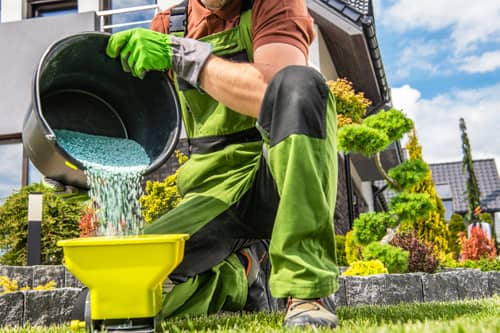
Slow-release granules are ideal in spring because they feed steadily while the lawn rebuilds energy stores. They also reduce flush growth that needs extra mowing, which is helpful on busy streets around the University and the Oread neighborhood.
Summer Strategy: Protect the Lawn Through Heat
July and August can bring high heat indexes and short drought stretches. Overfeeding during this time can stress turf and invite disease. Instead, pros emphasize measured nutrition, soil conditioners, and timing that support the plant without forcing rapid blade growth.
Avoid heavy midsummer nitrogen during heat waves in Lawrence; resilience beats fast top growth. Lawns in open, sunny pockets of Prairie Park or West Hills benefit from this measured approach because it helps them ride out hot spells with less thinning.
Fall Feeding: Build Density for the Year Ahead
Early fall is the main event for cool-season lawns. Soil is warm, air is cooler, and roots are ready to expand. The focus is on building thicker turf, deepening roots, and storing carbohydrates. This is also when overseeded areas establish faster with the right nutrition supporting new seedlings.
Late fall wraps up the year with a final, well-timed feeding that sets the turf up for winter dormancy. Come spring, those reserves help the lawn green up quickly across neighborhoods from Pinckney to Sunset Hill.
Product Choices: Why Slow-Release Granules Win in Lawrence
Product choice shapes both performance and peace of mind. In our climate, slow-release granular fertilizers deliver steady nutrients that match how cool-season grasses grow. They help prevent surge growth, reduce mowing spikes, and keep color even between service visits.
Pros also watch soil pH and organic matter, then adjust blends so the lawn can actually absorb what’s applied. That’s especially important in older areas like Old West Lawrence, where soil history varies house by house.
DIY Versus Pro Service: What Homeowners Should Consider
It’s tempting to try lawn nutrition on your own, but matching local timing, weather windows, and grass types can be tricky. Professional programs account for soil temperature, rainfall tracks, and disease pressure across different parts of town.
Pros carry a range of formulations and tools to tailor what your yard needs in real time. They also monitor how prior applications performed and fine-tune the next visit. If you prefer a hands-off path with predictable results, working with a pro team is the simple way to stay on schedule in Lawrence.
Signs Your Lawn Needs a Different Schedule
A standard plan works for many yards, but your lawn will “talk” to you. Pros look for patterns, not just one-off days, to decide when to adjust.
- Color that fades between visits, even with regular watering.
- Patchy density in shady pockets or high-traffic paths.
- More weeds than usual in late spring or late summer.
- Stress stripes after heat spikes or heavy storms.
- Slow recovery after routine mowing.
When these show up together, a technician can change timing or blend so the lawn gets what it needs, when it can use it best.
Storm timing matters along the Kansas River corridor. Heavy rain soon after a treatment can reduce effectiveness and move material off-site. Reputable teams time applications around forecasts and follow label directions to protect your lawn and local waterways.
How Lawrence Weather and Neighborhood Conditions Shape Results
Our spring can flip from chilly to stormy within days, which is why professional schedules use windows rather than fixed dates. Summer heat arrives hard on open lots in Prairie Park and West Hills, then eases by mid-September, when the best root-building happens. In leaf-heavy streets around Old West Lawrence, fall timing also lines up with cleanup, so nutrition reaches the soil rather than sitting on leaves.
Soil compaction is common near sidewalks, bus stops, and campus paths. Pros pair the right feeding with complementary services at other times of the year, so nutrients can penetrate and roots can breathe. If you want a plan that fits your specific block, talk with a team that knows the microclimates from Oread to Pinckney.
Putting It All Together With a Local Plan
When you choose a program designed for our city, you get consistency through the seasons and fewer surprises. That means lighter spring growth without surge, steadier summer color, and a dense fall lawn that’s ready for winter. It’s a simple way to keep your yard looking great without juggling products, timing, and weather.
As a trusted provider of local lawn care in Lawrence, Total Lawn matches feeding to grass type, shade patterns, irrigation, and how your family uses the yard. If your lawn is thin in shade, takes extra traffic near the driveway, or dries fast on the south side, your plan will reflect that, so results show up where you notice them most.
Where Professional Fertilization Fits Into Your Week
Most homeowners want a lawn they can enjoy without babysitting it. That’s why pro schedules are designed to work in the background and adjust as conditions change. Service visits are planned around growth cycles and local forecasts, and technicians keep notes so each visit builds on the last.
If you want the same consistency for your yard, it helps to align with a team that lives and works here in Lawrence. You’ll see fewer ups and downs across the year and a thicker, greener lawn from early spring through late fall.
Ready for a healthier lawn that holds color through heat and thickens up in fall? Partner with Total Lawn and schedule your lawn fertilization today for a plan built around Lawrence weather and your turf. Have questions right now? Call us at 913-961-7750, and we’ll help you choose the best path for your yard.
Want a season-by-season plan that fits your block, soil, and shade? Let’s tailor a schedule that keeps growth steady, color even, and roots strong all year.
Book Your Lawn Care Service In Lawrence Now for a Beautiful Yard!